
Transit Glyphs
A Photographic Investigation of Contemporary Glyphs, Urban Graffiti, and Symbolic Systems
Transit Glyphs investigates the emergence of a contemporary symbolic language embedded within the infrastructure of everyday life.
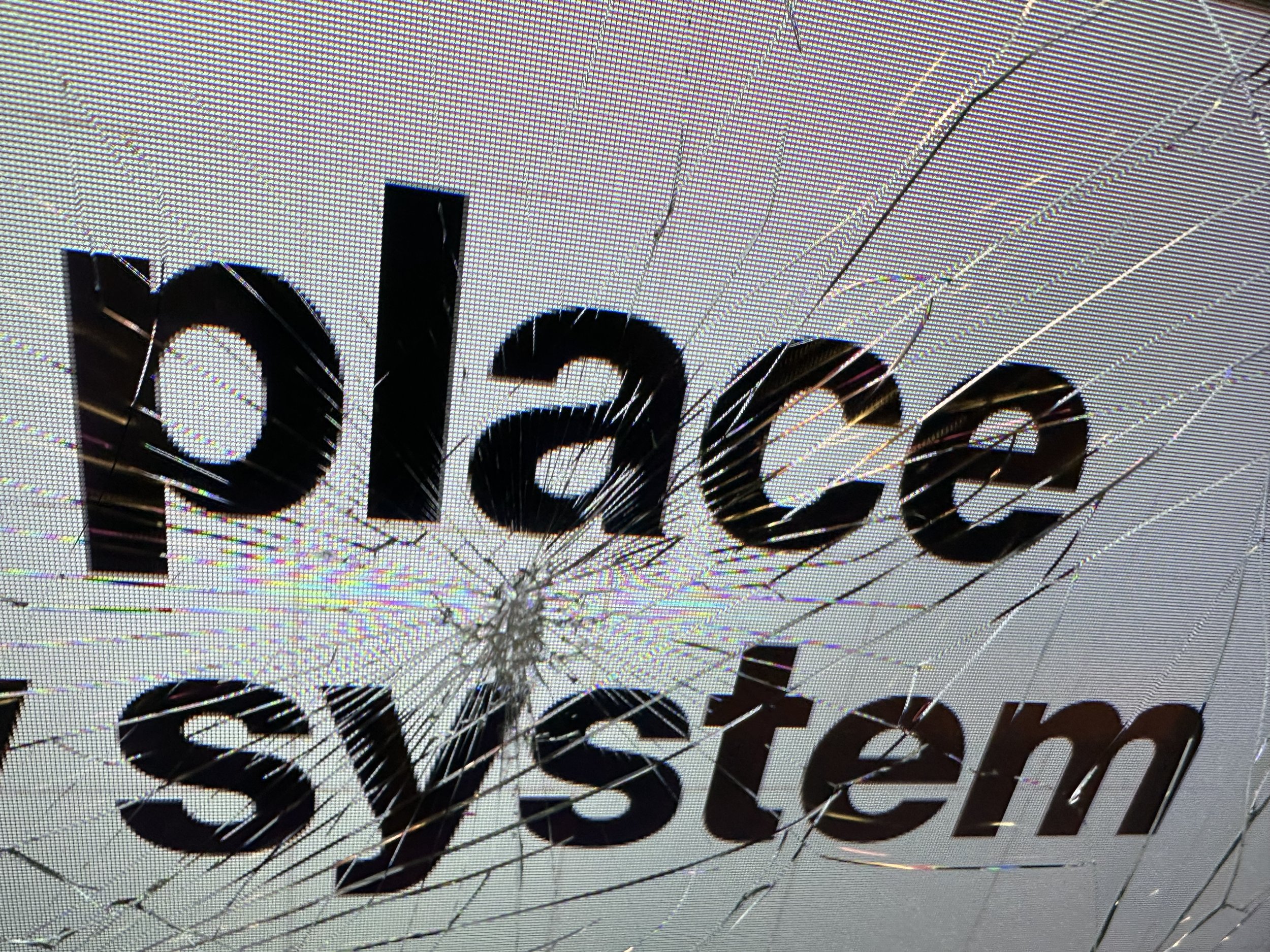
Photographed throughout New York City's transit system, shattered information screens reveal networks of marks that transform functional interfaces into fields of inscription. Fractures intersect typography, maps, and digital systems to create glyph-like forms existing between ancient writing, urban graffiti, abstraction, and code.
Like petroglyphs carved into stone, calligraphic gestures recorded through movement, or graffiti marking city surfaces, these accidental compositions reveal a fundamental human impulse to leave traces behind. The fractures create a script that resists translation while retaining rhythm, structure, repetition, and the persistent sense that meaning is present.
Connected to Universus, the series considers symbols as living systems that evolve alongside civilization. The damaged screen becomes a contemporary tablet—a place where technology, infrastructure, human behavior, and time collaborate to create a new visual language, one that feels ancient and futuristic, familiar yet still waiting to be read.
Transit Glyphs
A Photographic Investigation of Contemporary Glyphs, Urban Graffiti, and Symbolic Systems
Transit Glyphs investigates the emergence of a contemporary symbolic language embedded within the infrastructure of everyday life.
Photographed throughout New York City's transit system, shattered information screens reveal networks of marks that transform functional interfaces into fields of inscription. Fractures intersect typography, maps, and digital systems to create glyph-like forms existing between ancient writing, urban graffiti, abstraction, and code.
Like petroglyphs carved into stone, calligraphic gestures recorded through movement, or graffiti marking city surfaces, these accidental compositions reveal a fundamental human impulse to leave traces behind. The fractures create a script that resists translation while retaining rhythm, structure, repetition, and the persistent sense that meaning is present.
Connected to Universus, the series considers symbols as living systems that evolve alongside civilization. The damaged screen becomes a contemporary tablet—a place where technology, infrastructure, human behavior, and time collaborate to create a new visual language, one that feels ancient and futuristic, familiar yet still waiting to be read.
Transit Glyphs
A Photographic Investigation of Contemporary Glyphs, Urban Graffiti, and Symbolic Systems
Transit Glyphs investigates the emergence of a contemporary symbolic language embedded within the infrastructure of everyday life.
Photographed throughout New York City's transit system, shattered information screens reveal networks of marks that transform functional interfaces into fields of inscription. Fractures intersect typography, maps, and digital systems to create glyph-like forms existing between ancient writing, urban graffiti, abstraction, and code.
Like petroglyphs carved into stone, calligraphic gestures recorded through movement, or graffiti marking city surfaces, these accidental compositions reveal a fundamental human impulse to leave traces behind. The fractures create a script that resists translation while retaining rhythm, structure, repetition, and the persistent sense that meaning is present.
Connected to Universus, the series considers symbols as living systems that evolve alongside civilization. The damaged screen becomes a contemporary tablet—a place where technology, infrastructure, human behavior, and time collaborate to create a new visual language, one that feels ancient and futuristic, familiar yet still waiting to be read.